The layflat hose solves a very specific problem on site and in mining: moving large volumes of water over long runs without the weight and bulk of a conventional hose.
What is a layflat hose?
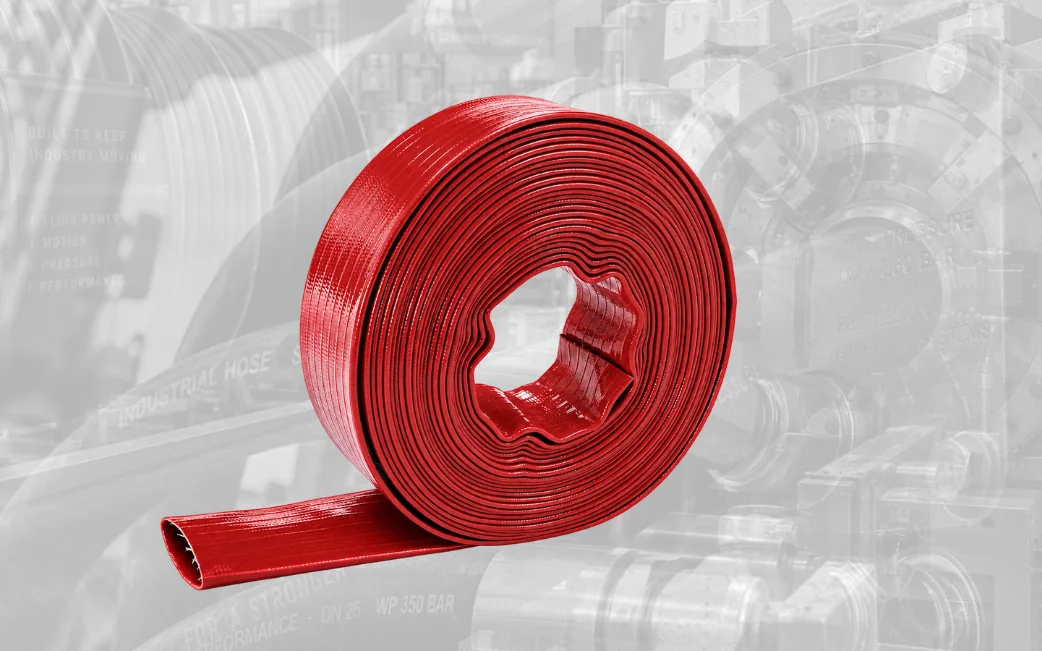
It is a discharge hose that lies completely flat when not pressurised. It rolls up like a tape and takes a fraction of the space of a round hose of the same diameter. Once pressurised, it takes its circular shape and works normally.
That is its whole advantage, and it is a big one: a hundred-metre run fits in a roll one person can move, whereas the same length in suction hose would need a vehicle.
What is it used for in construction and mining?
- Dewatering excavations. Removing water from a trench or basement where the line moves every few days.
- Pump discharge on site, carrying water from the pumping point to the discharge point.
- Temporary water conveyance at work fronts that keep moving.
- Irrigation and dust control on haul roads and stockyards.
- Provisional supply while the permanent network is installed.
The common denominator is that the line is temporary. If the installation will stay in the same place for years, rigid pipe is a better fit. Layflat shines when you have to set up, take down and set up again.
Light or heavy layflat?
The difference is wall thickness and reinforcement, and therefore the pressure they hold and the abuse they tolerate.
The light layflat is enough for low-pressure dewatering, irrigation and frequent moves where the ground is not aggressive. It weighs less and handles more easily.
The heavy layflat is the right call in mining, on sites with machinery traffic and wherever the hose drags over rock. It costs more, but under those conditions it lasts several times longer than a light one.
The practical criterion: if the hose will lie on ground where vehicles pass or loose rock is present, do not save money here.
Can layflat be used on suction?
No. And it is the most frequent mistake with this product. A layflat has no helical reinforcement, so as soon as the pump creates vacuum the hose flattens and cuts off the flow.
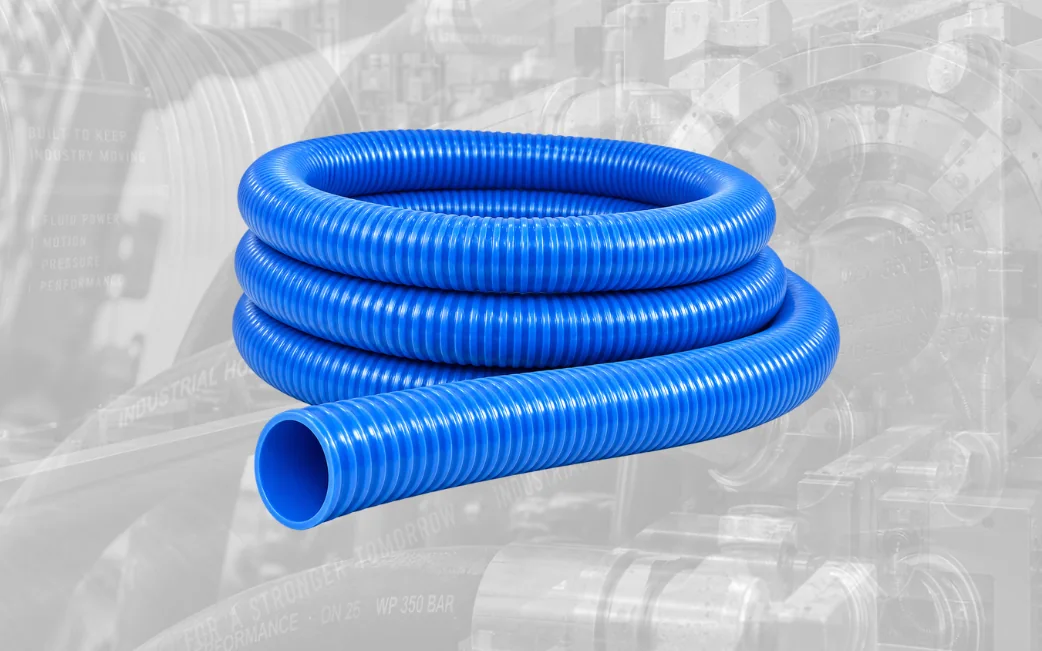
The suction side needs a hose with a rigid helix, such as the heavy suction and discharge hose. We cover this in detail in the suction and discharge guide.
How is it connected and laid out?
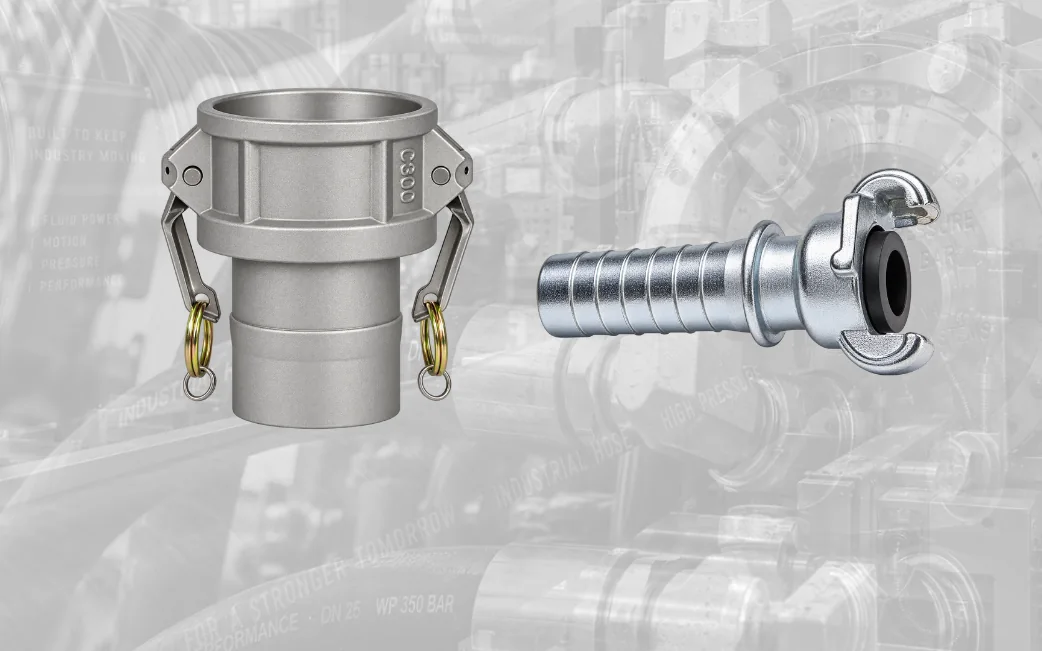
The usual approach is Camlock couplings with a double clamp at the end, because they let you assemble and dismantle the line quickly — which is exactly why layflat was chosen.
When laying it out, avoid sharp bends: a layflat bent at an angle closes off almost completely, since the wall has no rigidity of its own to hold the section. If the line must turn, use a wide curve.
How do I care for it so it lasts?
- Drain and dry before rolling. Standing water inside the roll encourages mould and odours, and in a humid climate like Panama that happens fast.
- Roll without twist, always in the same direction.
- Store in the shade. Sun dries out PVC and fine cracks appear along the folds.
- Protect vehicle crossings with a ramp or cable protector. A tyre on a pressurised layflat means a burst.
- Check the ends: the clamp area is where wear concentrates.
If you need help sizing a run —diameter, length and pressure— message us on WhatsApp. You can see all the options in the PVC hose catalog.