Choosing the wrong hydraulic hose is one of the most common causes of unplanned downtime in heavy machinery. A failure does not just stop the operation: high fluid pressure can cause serious accidents. The industry uses the STAMPED method —size, temperature, application, material, pressure, ends and delivery— so nothing is left to chance. Here we review it adapted to real conditions in Panama: high humidity, constant heat, and port, mining and construction operations that cannot afford to wait weeks for a spare part.
What hose diameter do I need?
The inside diameter determines flow rate and fluid velocity. Too small and the oil speeds up, generates heat and causes pressure drops that rob the equipment of power; too large and the assembly becomes expensive and hard to route. The practical rule is to respect the equipment manufacturer original size and verify the actual inside diameter, not just the nominal size printed on the cover.
As a reference, pressure lines normally run at considerably higher fluid velocities than suction lines, where the flow should be slowed down to avoid cavitation. When in doubt, measure the inside diameter of the old hose before ordering the replacement: it is the figure least likely to be wrong.
How does temperature affect a hydraulic hose?
Two different temperatures matter: the fluid running inside and the ambient air around the hose. In Panama the second one is no small detail. Heat and humidity are constant, and a hose routed near an engine or an exhaust line runs far hotter than the workshop thermometer suggests.
Each standard has its own temperature range. Cover and reinforcement degrade at different rates, and running continuously at the top of the range shortens service life noticeably. For high-temperature applications, check whether a PTFE hose such as the SAE 100 R14 is the right call: its inner tube withstands conditions that would degrade conventional rubber.
What working pressure should I require?
Identify the circuit maximum working pressure —including spikes, not just the nominal figure— and choose a hose whose rated pressure exceeds it with a safety factor of at least 4:1. In other words, burst pressure should be at least four times working pressure.
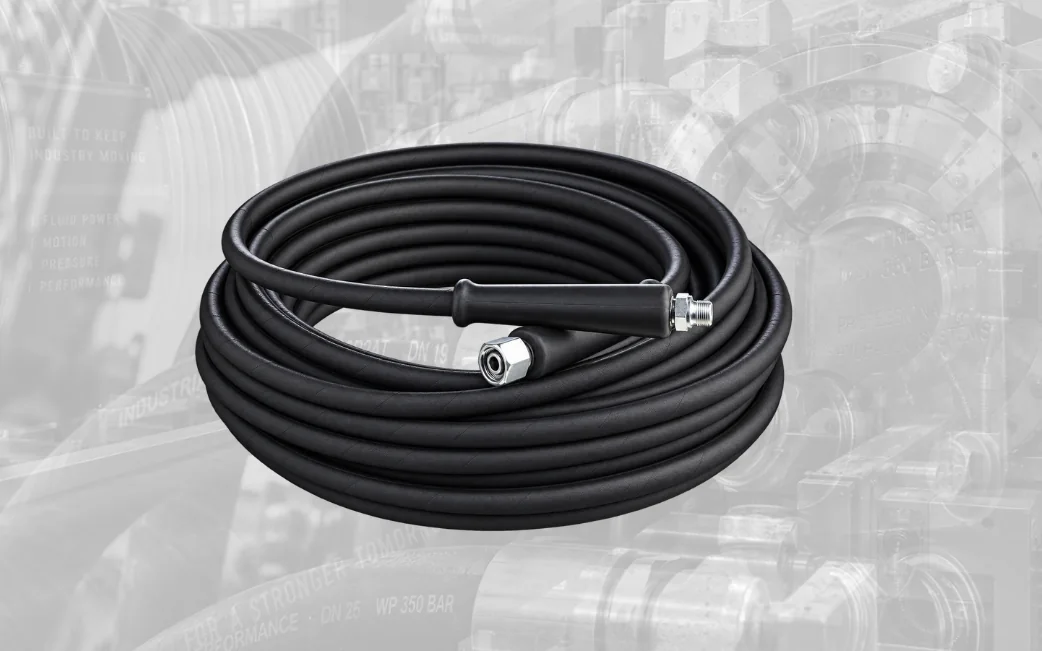
For medium-high pressure, the SAE 100 R1 with a single steel braid is common. For high pressure, the SAE 100 R2, with a dual braid. When the application involves severe impulses —excavators, presses, drilling equipment— the move is to four-layer spiral hoses such as the 4SP or 4SH, which handle far more demanding pressure cycles.
A frequent mistake is looking only at pressure and forgetting impulses: a circuit running at moderate pressure but thousands of cycles per hour punishes the reinforcement more than a high but steady pressure.
Is the fluid compatible with the inner tube?
Hydraulic oil, fuel, water-glycol or chemicals must be compatible with the inner tube material. An incompatible tube degrades from the inside, with no visible signs on the cover, until it bursts without warning.
If your equipment switched fluid types —say from mineral oil to a synthetic or fire-resistant fluid— verify compatibility before reusing the same hose type. This also applies beyond hydraulics: for fuel or chemicals the correct line is under rubber hoses, not a generic hydraulic hose.
What end fittings do I need?
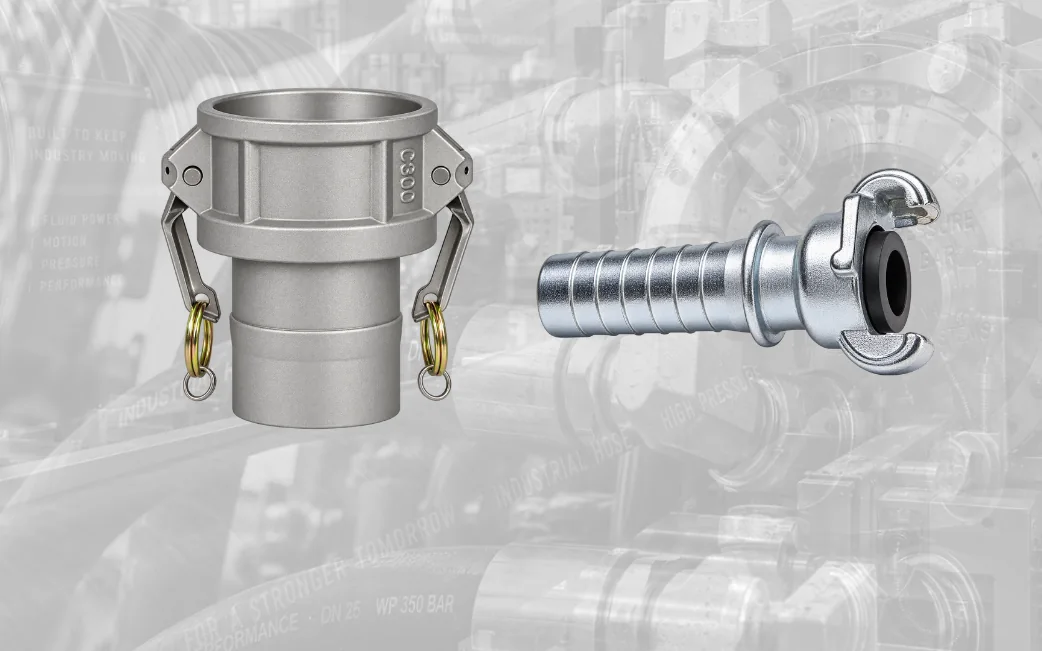
Fittings —JIC 37°, NPT, BSP, ORFS, M22— must match the equipment exactly. This is where many leaks happen: a thread that almost fits does not seal, and forcing it permanently damages the seat.
Beyond the thread, the ferrule and the crimp matter. A badly crimped assembly fails even when hose and fitting are correct: too little crimp pressure and the hose blows off under pressure; too much and the reinforcement is damaged. See the full range under hydraulic fittings.
How much does local availability matter?
This is the most underestimated factor. A hose of the perfect standard that takes three weeks to arrive is, in practice, worse than an equivalent alternative available the same day. Working with a supplier that keeps local stock and assembles to spec dramatically reduces downtime.
At YRVIMAR we assemble hydraulic hoses with the fittings your equipment requires, from our location in Parque Lefevre, Panama City.
Common mistakes worth avoiding
- Choosing by price while ignoring the SAE standard the equipment requires.
- Reusing worn fittings on a new hose: the seal is made at the seat, and a scored seat will not seal.
- Bending below the minimum bend radius, which collapses the reinforcement from the inside.
- Leaving no slack: the hose contracts when pressurised, and installed taut it tears away from the fitting.
- Unprotected abrasion: if the hose rubs against a structure, the cover wears through and exposes the steel reinforcement, which then rusts and fails.
How often should a hydraulic hose be replaced?
There is no universal interval: it depends on pressure, temperature, cycles and exposure. What is constant is that most failures give warning first. Blisters on the cover, weeping around the ferrule, a cracked cover or exposed steel reinforcement are signs for immediate replacement, not for monitoring. Read more in our guide to preventive maintenance of industrial hoses.
If you are unsure about size or standard, send us a photo of the hose and its fittings on WhatsApp: with the cover marking and the thread type we can identify the correct replacement and assemble it to spec. You can also browse the full hydraulic hoses catalog.