Suction and discharge hoses are the heart of any pumping operation: agricultural irrigation, dewatering on site, liquid transfer or drainage. Understanding the difference between the two sides of the pump prevents wrong purchases, premature failures and, above all, that moment when the hose collapses and the job stops for no apparent reason.
What is the difference between suction and discharge?
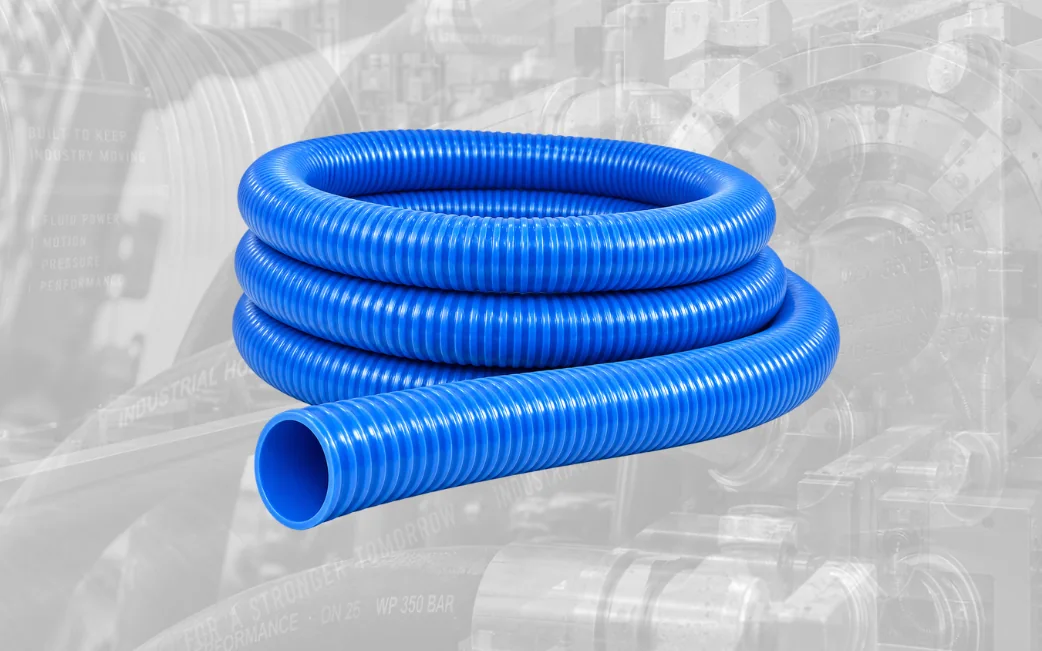
On the suction side the pump creates a vacuum to pull the liquid. Pressure inside the hose is lower than atmospheric, so the force acting on it pushes inward. That is why a suction hose must resist collapse: it carries a rigid helical reinforcement —a PVC or wire helix— that keeps the section open.
On the discharge side the opposite happens: liquid exits under pressure and pushes outward. There is no vacuum to resist, so a flexible hose without a helix is enough, such as a layflat, which also rolls up flat and takes far less storage space.
The practical consequence: a discharge hose used on suction will collapse; a suction hose used on discharge works, but is more expensive, heavier and harder to store than necessary.
Why does a suction hose collapse?
Almost always for one of these four reasons, and none of them is about hose quality:
- A discharge hose was used on the suction side. With no helix there is nothing holding the wall.
- The inlet strainer is clogged. The pump keeps pulling, but with no flow coming in, vacuum rises until it overcomes the hose.
- Suction lift is excessive. The higher the liquid has to climb, the greater the vacuum required.
- The hose is bent below its minimum radius, reducing the section exactly where it is needed most.
If a suction hose collapses repeatedly at the same point, check the routing before blaming the material.
Which PVC hose do I choose for each job?
It depends on three things: which side of the pump, how heavy the service is, and whether the liquid contacts food.
- Water suction, general service: the light-duty covers irrigation and transfer without abrasives.
- Suction with solids or heavy service: the heavy-duty handles sand and mud far better.
- Discharge: light or heavy layflat depending on pressure and site handling.
- Food and drinking water: the non-toxic line, either textile-reinforced or steel-reinforced if it must also withstand suction.
How do I connect it properly?
Most pumping leaks are not in the hose but at the joint. Two recommendations solve nearly every case.
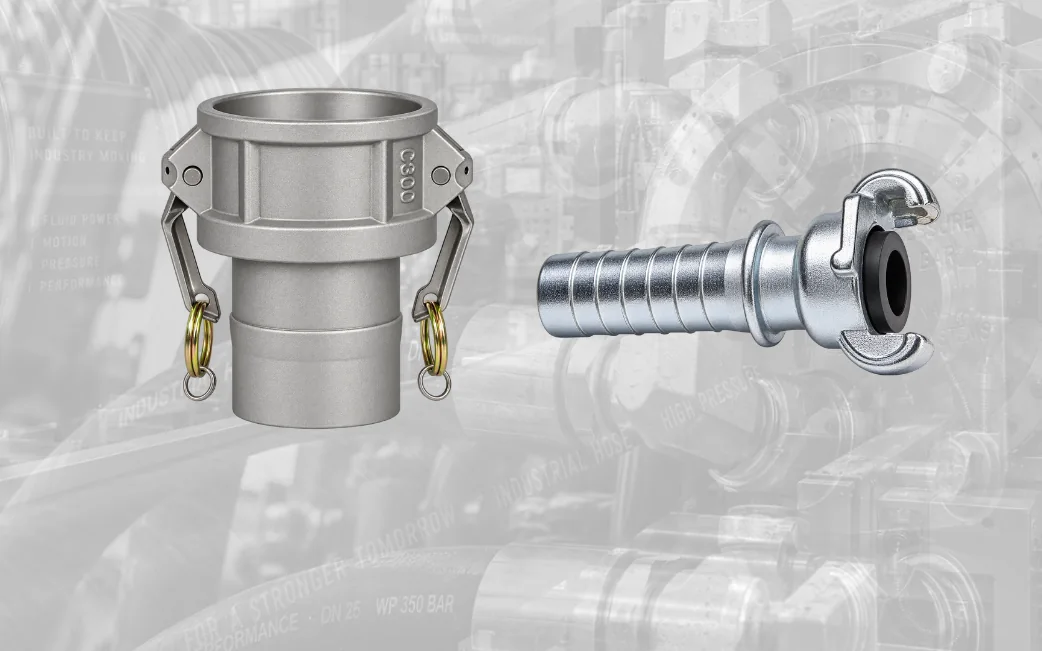
First, use cam-and-groove couplings —Camlock— whenever you need to connect and disconnect often. They open and close by hand, no tools, and seal well as long as the gasket is in good condition.
Second, on the suction side secure the joint with a double clamp and fit a strainer at the inlet. The strainer does not only protect the pump impeller: it also prevents the clogging that causes the collapse described above.
What diameter should the suction hose be?
As a general rule, the suction hose should never be narrower than the pump inlet. Reducing diameter on suction is the fastest way to generate cavitation: vapour bubbles form and implode inside the impeller, pitting it until it is ruined.
On discharge there is more margin to reduce, but every reduction costs pressure. If the pump moves less flow than expected, check the suction diameter before assuming the pump is worn.
How long does a PVC hose last in Panama?
Panama climate is demanding on PVC: direct sun, heat and constant humidity. Ultraviolet radiation hardens the material over time and fine surface cracks appear, especially on hoses left lying in the sun between shifts.
Storing them in the shade and coiled without sharp bends extends service life noticeably and costs nothing. Draining the water at the end of each job also prevents sediment building up in the folds.
Signs it needs replacing
- The helix separates from the wall or looks sunken along a section.
- Flattened areas appear that no longer return to a round shape.
- Visible cracks when bending it, or the material feels brittle.
- The hose stretches or swells under pressure more than when it was new.
If you are unsure which hose suits your pump, message us on WhatsApp with the inlet size, the suction lift and the type of liquid: with those three figures we can recommend the right option from the PVC hose catalog.