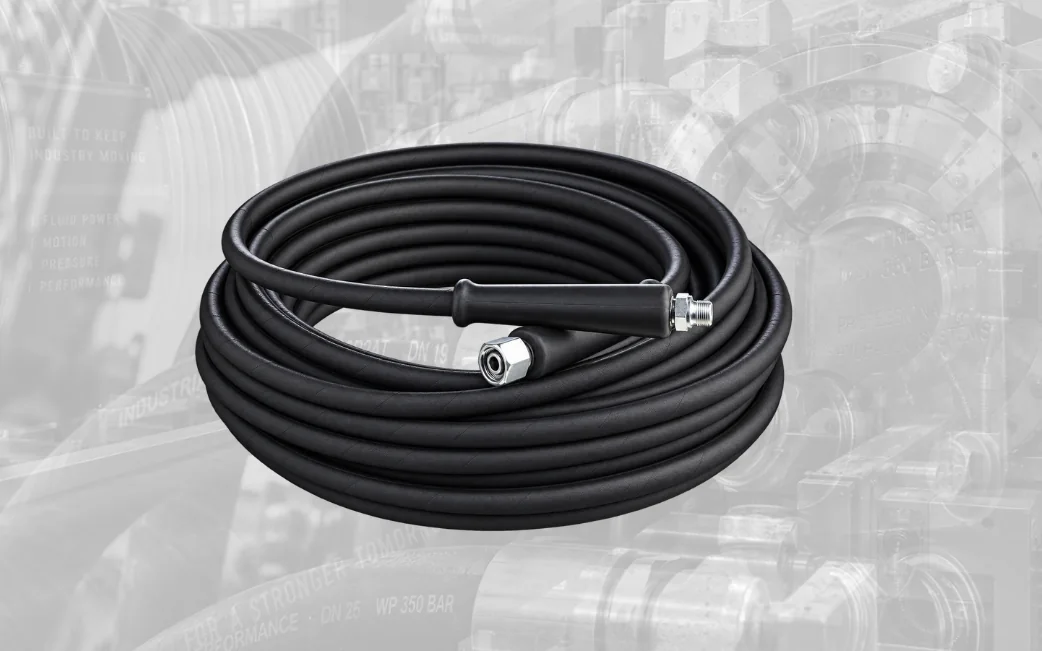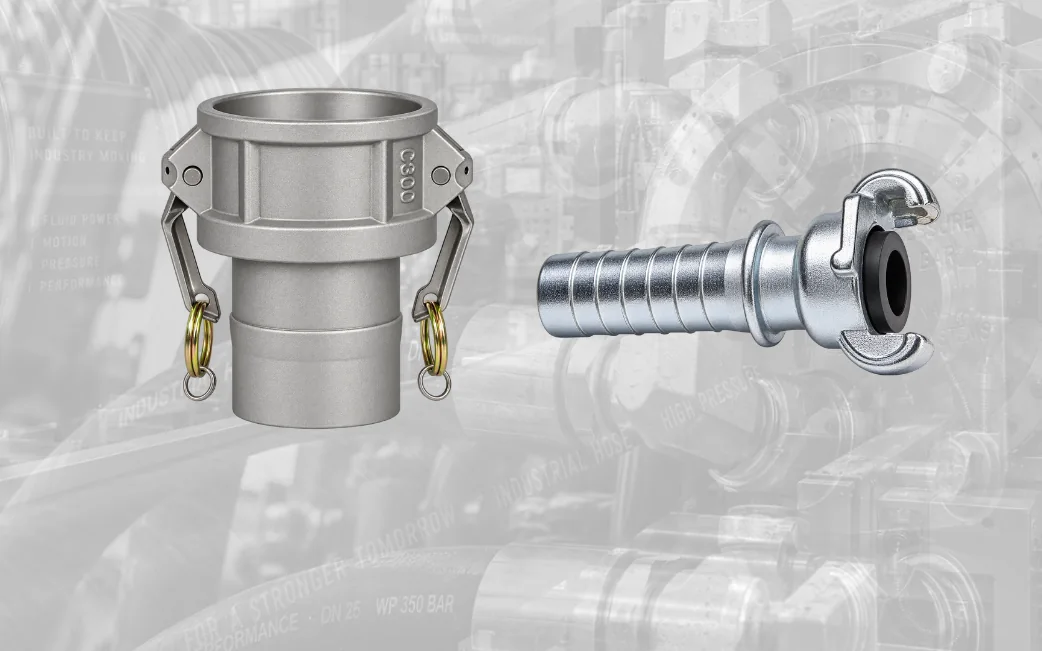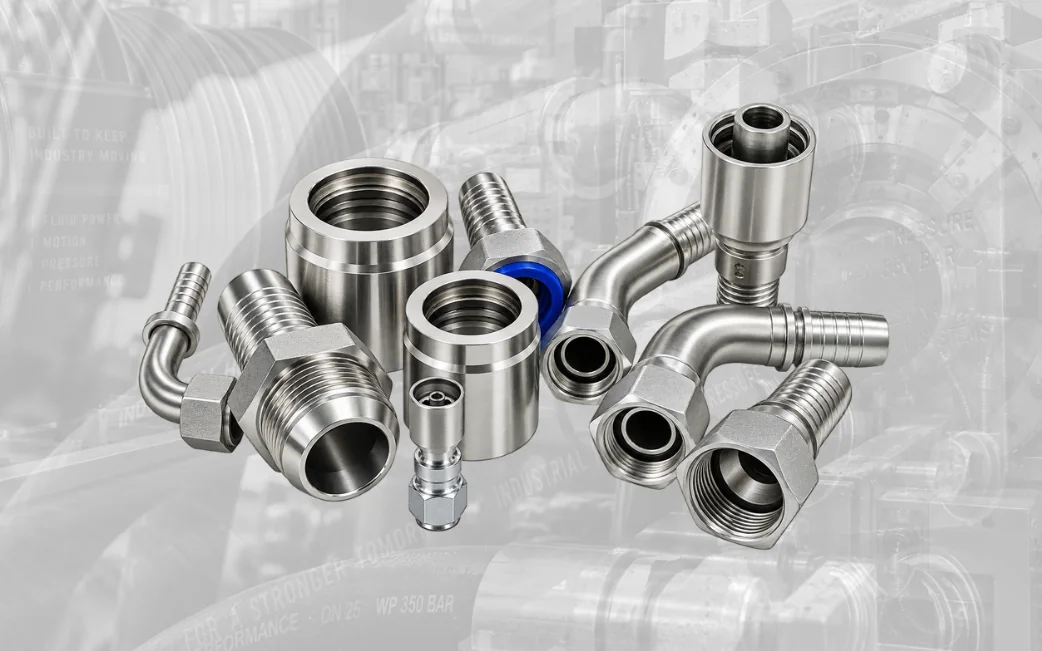
On the same line you can find a valve marked WOG, a hose marked in PSI and a fitting with an SAE standard. They are three different ways of stating how much pressure each part withstands, and confusing them is why sometimes the cheapest component in the installation is the one that fails.
What does WOG mean on a valve?
WOG stands for Water, Oil, Gas. When a valve says 600 WOG, it means it withstands 600 PSI working with those three fluids at ambient temperature.
The part usually overlooked is that last condition. The WOG rating assumes ambient temperature; as temperature rises, allowable pressure drops. A 600 WOG valve does not hold 600 PSI if the fluid runs hot.
You may also see a WSP rating (Working Steam Pressure), always much lower, because steam is far more demanding than cold water.
What are working pressure and burst pressure?
They are two different figures and confusing them is dangerous:
- Maximum working pressure is what the part can withstand continuously and safely. This is the figure to compare against your circuit.
- Burst pressure is where the part fails in a test. It is not a service pressure: it is a laboratory figure.
The relationship between them is the safety factor. On hydraulic hoses 4:1 is standard, meaning burst pressure is four times working pressure. That margin is not a luxury: it covers pressure spikes, material ageing and cycle fatigue.
PSI or BAR?
Datasheets usually carry both units because American and European manufacturers coexist. The practical conversion: 1 bar is about 14.5 PSI, and 100 PSI is roughly 6.9 bar.
For quick field estimates many technicians round 1 bar to 14.5 PSI; for selecting a component, check the exact figure on the datasheet rather than the approximation.
Why does temperature reduce allowable pressure?
Because materials lose strength as they heat. In a hose, the inner tube rubber softens and the adhesive between layers performs worse; in a valve, the metal yields slightly and the seat seals with less force.
In Panama this matters more than it seems. It is not just the fluid: a line running in the sun, or passing near an engine, works considerably hotter than the workshop temperature. If your selection was tight on paper, heat can leave you with no margin.
How do I choose the right component?
A procedure that works:
- Identify the circuit real maximum pressure, spikes included. Not the pump nominal figure: the one reached at the worst moment.
- Add margin for temperature if the line runs hot.
- Pick the part whose working pressure exceeds that value, not its burst pressure.
- Check the weakest link. The allowable pressure of the line is that of its weakest component: a high-pressure hose is useless with a cheap clamp.
The most common mistake: looking only at the hose
A line is a chain. Hose, ferrule, fitting, coupling, gasket and clamp each have their own limit, and the assembly holds only as much as the weakest one.
It is common to see a perfectly specified SAE 100 R2 hose joined with a coupling that does not reach that pressure. The hose does not fail: the joint does, and the result is the same.
Where do I find these figures?
On each product datasheet and, for hoses, printed on the cover itself alongside the diameter and the standard. That marking is the fastest way to identify an installed hose without dismantling it.
In our catalog every product includes a downloadable datasheet, both under hydraulic hoses and valves and equipment.
If you are unsure whether a component holds your working pressure, message us on WhatsApp with the circuit pressure and the fluid temperature, and we will confirm the right option.